
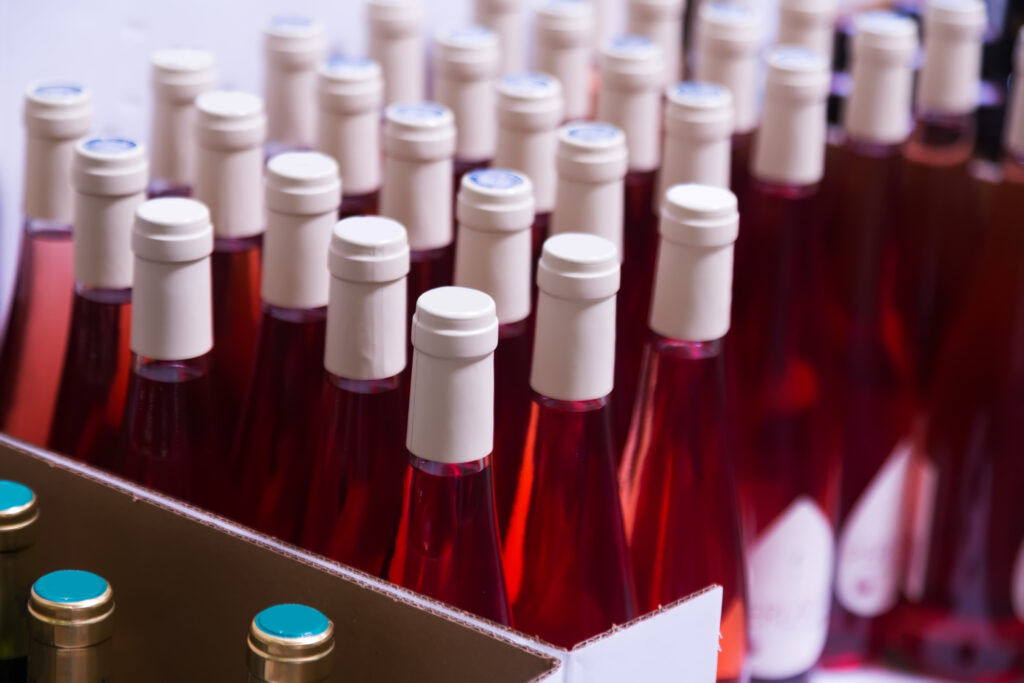
It is now known that agri-food exports have been driving the Italian economy for several years, one of the most relevant sectors is that of wine, which, to tell the truth, has always been the protagonist on the global scene; Italian companies exported a whopping 21.5 million hectoliters of wine in 2019 (source inumeridelvino.it).
Shipping wine abroad is not always without unexpected events; transport, especially by sea and especially between one hemisphere and another, or between mild locations and very hot or very cold destinations, can cause irreversible damage. It can often happen that the damage is evident from the moment the goods are received with inevitable complaints, other times the damage can occur when the bottles are opened with evident organoleptic alterations that affect their flavour.
What exactly happens during transportation?
The temperature outside the container can vary based on many factors: season, climate, day/night alternation. The internal temperature of the container can vary depending on the position on the cargo ship, but the temperature in the container can also vary inside it: low near the floor, high near the ceiling.
Based on these factors, it has been demonstrated that the internal temperature can be up to 30 C degrees higher than the external one and that, due to direct radiation from a container, the internal temperature in the upper part of the container can even reach 75 C degrees.
However, if you have escaped the risks of transport, you may encounter those of parking, which are equally harmful.
What consequences does all this have on wine?
Subjecting the wine to high temperatures necessarily leads to a “negative change in the overall quality of the wine, which no longer conforms to the expectations of the buyer or final consumer”, underlines Dr. Alessandra Biondi Bartolini Agronomist and Freelance Journalist in her article published in Mille Vigne in 2013, adding that “Wines subjected to extreme temperatures for more or less prolonged periods undergo alterations in their organoleptic profile, due to variations in their physical and chemical characteristics. The wine and gases contained in the headspace undergo dilation phenomena and the package (bottle, cork and capsule) is subjected to continuous physical stress. The observable phenomena, in addition to sometimes breaking the bottles, are the partial or total leakage of the corks, the lifting of the capsules and the pouring of the wine along the walls of the cork. Aging reactions, especially those linked to oxidative evolution, undergo rapid acceleration. The sulfur dioxide present at the time of bottling is rapidly consumed and the wines find themselves unprotected even in the face of a greater entry of oxygen from the corks, subjected with the liquid to an alternation of expansion and constriction phases which determine a recall of gas from outside. The most obvious consequence of this accelerated oxidative aging can be found in the color variation, with an increase in color intensity in white wines and brick red shades in red wines. In the worst conditions, and if the wines have not been subjected to adequate stabilization processes, exposure to extreme temperatures can cause a decrease in the carbon dioxide content in semi-sparkling or sparkling wines, in a refermentation in the bottle or in the formation of protein or tartrate precipitates in the case of low temperatures.”
The solution to all this?
A solution exists and is within everyone’s reach, both for those who export entire containers and for those who ship in groupage: thermal liners for containers and thermal covers for pallets.
Both solutions allow the load to be kept at a decidedly ideal temperature compared to the outside temperature, protecting the flavors and chemical structures of the wine. Thanks to the use of a data logger (electronic device that keeps track, in real time, of the temperature of the goods during transport) it is also possible to check, upon arrival of the goods, what temperature they were subjected to, proving correct transport and attributing any liability for damage caused to it.
I thank Dr. Alessandra Biondi Bartolini for the interesting information that she was able to convey to all of us with her article. I invite you to read the original article and many other useful information that you can find on the Millevigne magazine website: https://www.millevigne.it